
SPANISH ASSOCIATION OF ENVIRONMENTAL HUMANITIES
There is no environmental change without social understanding or historical perspective
Environmental humanities
We understand environmental humanities as a transdisciplinary approach that analyses how societies and natural environments shape each other over time. We start from the idea that territories are neither neutral nor static realities, but historical constructions shaped by power relations, values, memories, conflicts, and collaborative dynamics.
At AeHA, we distance ourselves from approaches that treat the “human” component marginally or subordinate it to techno-ecological models. We maintain that environmental management cannot be reduced to biophysical knowledge of the environment or technoscientific solutions. It requires a critical review of dominant certainties that render other equally legitimate perspectives invisible.
Environmental humanities thus provide tools to question singular interpretations, make visible knowledge and experiences contextualised in space and time, and understand territories as spaces of social, material, and symbolic interdependencies in constant transformation.
The visible and the invisible

Visions that idealise nature as a pure, harmonious space, detached from history, tend to obscure fundamental questions: who defines environmental problems, from what positions, and for whose benefit. These narratives are often accompanied by the fiction of a lost social harmony, which depoliticises conflicts and naturalises technical decisions.
Nature is neither neutral nor external to society. It is a space shaped by social, economic, and political relations, where inequalities, tensions, agreements, and also forms of cooperation occur.
Making these dimensions invisible hinders effective and fair environmental management, especially when interventions are imposed in the name of an abstract “nature” that silences local knowledge, experiences, and practices.
Territorial collaborations are neither spontaneous nor harmonious: they are situated, negotiated, and often fragile. Only by making interdependencies, conflicts, and power asymmetries visible is it possible to create conditions for lasting cooperation and genuinely shared environmental management.

Who we are
AeHA brings together professionals and researchers working through the integration of knowledge to understand and address environmental challenges. Our aim is to build bridges between disciplines, territories, communities, experts, and environmental managers. We promote initiatives that connect science, society, and the natural environment through dialogue, mediation, and critical reflection, embracing the complexity and diversity of our relationship with the natural world without simplifying or hiding it.
We defend the value of environmental humanities — history, geography, sociology, anthropology, political science, philosophy, literature, and the arts — in close dialogue with natural sciences and engineering, as indispensable tools for rethinking how we want to inhabit the world.
Creating community, knowledge and change
We situate ourselves at the intersection of culture, society, and the environment. We believe in the power of shared reflection to tackle present challenges and open new possibilities for action. If you feel the need for a space to exchange ideas, connect initiatives, and expand their reach, AeHA wants to be that place. We know that many people are interested in these issues, though often isolated or dispersed. That is why we provide a platform to meet, connect, and work together.
AeHA is member of the International Consortium of Environmental History Organizations (ICEHO)
Our activities
We address public and private institutions seeking a more complex and human-centred approach to environmental management.
From our founders
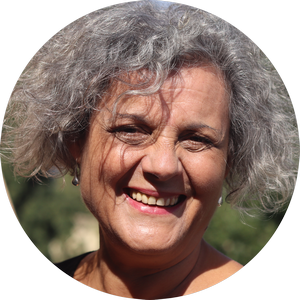
Ana González Besteiro. President
Working as an environmental biologist, I always felt a void that was difficult to put into words. A void born from the inconsistencies I perceived between environmental management and the realities observed in the field. I found it impossible to accept the idea — so widespread in the scientific and naturalist circles I frequented — that populations acted almost out of malice against their own natural environment. I was also sceptical of repeatedly hearing environmental recommendations which, although well intentioned, I knew would ultimately remain nothing more than words on paper.
In this search to understand what was missing, I came across the environmental humanities. That illuminating encounter allowed me to integrate into my projects an exploration of the invisible: the deep bonds between people and places, social representations, the discourses that reveal and those that silence, and qualitative methodologies that are closer to real lives. Incorporating these new perspectives and methodological tools into my work brought coherence and depth to aspects that until then had been insufficiently addressed.
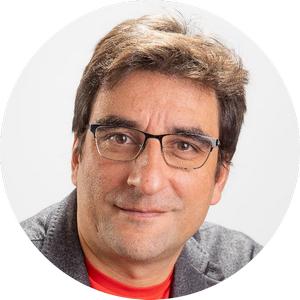
Alberto Celis Pozuelo, Secretary
As an environmental historian and geographer, I work at the intersection of the history of science and environmental history. I begin from a fundamental premise: the environment is not a single or immutable reality, but the historical outcome of different forms of knowledge, governance, and intervention in terrestrial and aquatic spaces. Over time, science and institutions have defined and transformed multiple “natures” according to specific social, political, and economic contexts.
Decisions concerning land, water, and natural resources have produced diverse landscapes and ecosystems, as well as varied ways of inhabiting terrestrial and aquatic environments. In regions such as the Mediterranean, these transformations have been particularly intense due to the historical overlap of political projects, economic interests, and scientific knowledge. These processes have also had an international dimension, shaped by competition among states and expansionist projects aimed at controlling spaces, resources, and knowledge.

Carmen Sánchez Gutiérrez, Treasurer
I am a geographer and a guide in a Spanish national park, with more than 30 years of experience in environmental education and in the interpretation of heritage in protected natural areas. My work combines outreach and research on wetlands and hydraulic cultural heritage, highlighting how understanding the environment and its history contributes to sustainability, environmental knowledge, and citizen participation—key pillars of the environmental humanities.
Passionate about local heritage, ornithology, and speleology, I apply a gender perspective in my work, promoting equality and making visible the impacts of water-related conflicts. As an environmental activist, I advocate for citizen science as a transformative tool and as a means to raise awareness about water resource management and the conservation of natural and cultural heritage.
Contact